0755-27781532-8010; 02988446863













Oct 14, 2026
Custom Mini CNC FR-4 PCB Manufacturer in China for OEM Applications
Sep 09
Intelligent Browse: 142
For many electronic products, the PCB is not a large or highly complex board. Instead, the challenge is often to produce a small, accurately machined, stable, and application-specific circuit board that fits into limited internal space while maintaining reliable electrical performance. This is particularly important for products such as ceiling fans, induction cookers, and radio drilling machines.
A custom mini CNC FR-4 PCB can be a practical solution for these applications. By combining FR-4 material with customized board dimensions, CNC drilling, controlled hole sizes, and application-specific circuit layouts, manufacturers can produce PCBs that fit the mechanical and electrical requirements of different devices.
For OEM buyers looking for this type of board, working directly with an experienced Chinese PCB manufacturer can also simplify communication between engineering, production, testing, and delivery. XingDa Group, founded in 2011, is a professional manufacturer specializing in PCB, FPC, rigid-flex PCB, PCBA, and EMS services. The company is headquartered in Shenzhen, China, and operates three production bases with a combined area of more than 36,000 square meters.
XingDa Group – PCB & PCBA Manufacturer
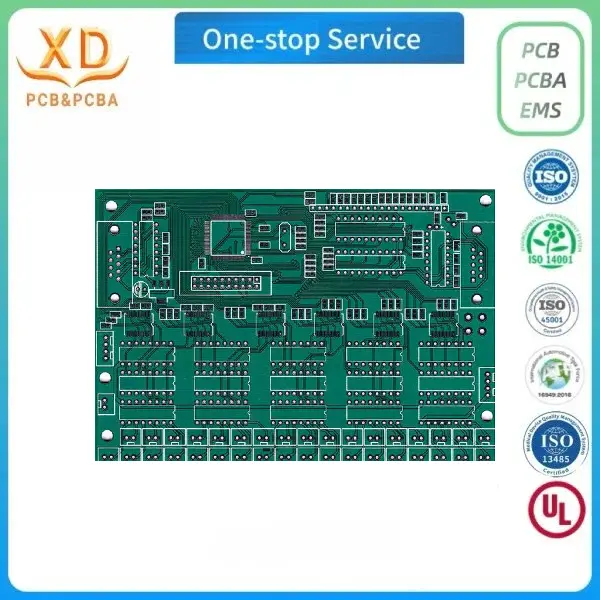
What Is a Custom Mini CNC FR-4 PCB?
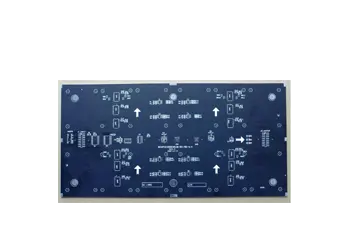
A mini FR-4 PCB is generally designed for electronic equipment where installation space is limited. The board may need to match a specific housing, mounting structure, connector position, or control module. CNC machining can then be used for drilling and routing operations according to the customer's design requirements.
For this product, XingDa lists FR-4 as the base material and supports 4–20 layers, board thicknesses from 0.2 mm to 6 mm, and copper thicknesses from 0.5 oz to 12 oz. The available surface finishes include HASL, ENIG, and OSP, while solder mask options include green, white, red, blue, and black.
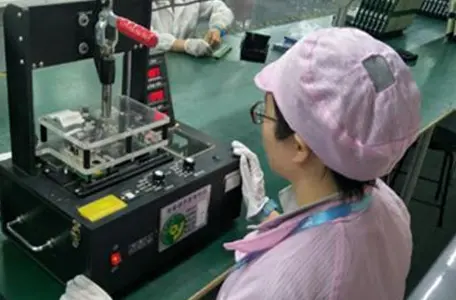
The manufacturer also lists a minimum trace width and spacing of 3 mil/3 mil, a minimum CNC-drilled hole size of 0.1 mm, impedance control, and 100% electrical testing. These options allow OEM customers to select a PCB configuration based on the actual requirements of their equipment rather than using a fixed standard board.
Custom Mini CNC FR-4 PCB Product Page
Why FR-4 Works Well for Small Control Boards
FR-4 remains one of the most widely used PCB materials because it provides a practical combination of mechanical strength, electrical insulation, processability, and temperature resistance for many electronic applications.
For a ceiling fan controller, for example, the PCB needs to accommodate motor control circuits, speed regulation functions, switching components, and protection-related circuitry within a relatively compact housing.
In an induction cooker, the board may be required to handle control signals related to power drive, temperature sensing, over-temperature protection, and user operation. XingDa specifically lists its custom FR-4 PCB for these functions and highlights the material's suitability for the working conditions of kitchen heating appliances.
The same principle applies to industrial equipment. When a drilling machine has limited internal installation space, the PCB layout may need to follow a specific shape while providing connections for motor drive, sensors, signal reception, and status monitoring.
This is where a customized PCB can be more useful than a standard off-the-shelf circuit board.
Applications in Ceiling Fan Control
Ceiling fans may look relatively simple from the outside, but their internal control systems still require a PCB that can operate consistently over long periods.
A custom mini FR-4 PCB can integrate functions such as:
- Fan speed regulation
- Forward and reverse rotation control
- Motor-related protection functions
- User control interfaces
- Sensor and signal connections
The board dimensions can also be adjusted according to the fan's internal housing and mounting structure. XingDa's product information identifies ceiling fans as one of the target application scenarios for this custom FR-4 PCB.
For OEM manufacturers, this means the PCB does not have to be treated as an isolated component. Its dimensions, holes, connectors, and circuit configuration can be considered together with the final product design.
FR-4 PCB for Induction Cookers
Induction cookers present a different set of requirements. The PCB needs to work within an appliance where power electronics, temperature monitoring, control functions, and user interfaces operate together.
A properly designed FR-4 PCB can support circuits for:
- Power control
- Temperature sensing
- Over-temperature protection
- Display and user-interface signals
- Internal control communication
For these applications, PCB design is closely related to component selection, copper thickness, thermal considerations, clearance requirements, and the physical arrangement of the board.
XingDa's custom product is specifically positioned for induction cooker applications, with the product page noting its use for power drive, temperature sensing, overheating protection, and user interaction signal processing.
For OEM projects, the important point is that the PCB specification should be developed around the actual electrical load and installation environment rather than selecting a generic FR-4 board simply because it is inexpensive or readily available.
Compact PCB Design for Drilling Machines
Industrial drilling equipment can require compact electronic control boards despite having considerably different operating requirements from household appliances.
A custom mini PCB may need to fit inside a restricted enclosure while connecting to motors, sensors, switches, and monitoring circuits. The physical board shape therefore becomes part of the engineering work.
XingDa identifies radio drilling machines as another application for its custom mini CNC FR-4 PCB. The listed functions include motor drive, signal receiving, sensor feedback, and working-status monitoring.
CNC drilling and routing are particularly relevant when hole locations, mounting points, or board dimensions need to match a customer's mechanical design. Instead of adapting the equipment around a standard PCB, the board can be manufactured according to the equipment's existing structure.
What OEM Buyers Should Confirm Before Production
When sourcing a custom mini FR-4 PCB, a clear technical specification can prevent unnecessary revisions during production.
OEM buyers should normally provide or confirm:
- Gerber files and drill files
These define the circuit pattern, board outline, and hole information required for manufacturing. - Board dimensions and mechanical requirements
Small PCBs often need precise mounting holes, cut-outs, slots, and connector positions. - Layer count and copper thickness
These should be selected according to the electrical and thermal requirements of the application. - Surface finish
HASL, ENIG, and OSP may be selected according to component assembly and application requirements. - Electrical testing requirements
Testing requirements should be established before mass production, particularly for control boards used in appliances and industrial equipment. - PCBA requirements
If the customer needs assembled boards rather than bare PCBs, BOM, pick-and-place data, component specifications, and assembly requirements should also be provided.
This approach makes the manufacturing process more predictable and gives the PCB supplier a clearer engineering target.
Why Consider a Chinese PCB Manufacturer?
China has developed a mature PCB manufacturing and electronics supply chain, allowing OEM buyers to source bare PCBs, PCBA, and related manufacturing services from the same supplier.
For international buyers, the value of a Chinese PCB manufacturer is not simply the ability to produce boards in volume. Engineering communication, manufacturing flexibility, testing, component assembly, and delivery coordination can all affect the final result.
XingDa Group has been engaged in PCB manufacturing since 2011. Its production scope covers PCB, FPC, rigid-flex PCB, PCBA, and EMS. The company reports more than 36,000 square meters of production facilities, PCB monthly production capacity of 100,000 square meters, and FPC monthly production capacity of 12,000 square meters.
Its PCBA operation includes 8 SMT lines and 6 DIP lines, with one SMT line listed at 210,000 CPH. Its EMS services also cover PCBA, housing/case molding, packing, assembly, and functional testing.
This broader manufacturing structure can be useful for OEM customers who want to move from PCB prototyping to assembled boards without changing suppliers.
A Practical Choice for Customized OEM PCB Projects
The right mini PCB is rarely defined by board size alone. For ceiling fans, induction cookers, drilling machines, and similar equipment, the board must fit the mechanical structure, support the required circuit functions, and remain consistent during repeated production.
A custom mini CNC FR-4 PCB provides manufacturers with the flexibility to control board dimensions, layer configuration, copper thickness, hole structure, surface finish, and other manufacturing details according to the application.
For OEM buyers, choosing a supplier with both PCB and PCBA capabilities can further simplify the manufacturing process. XingDa Group's experience in PCB manufacturing, together with its broader FPC, PCBA, and EMS capabilities, provides a manufacturing platform for customers developing customized electronic products.
For a project requiring a compact FR-4 circuit board, the best starting point is a complete technical package: board files, dimensions, electrical requirements, application environment, and expected assembly process. With these details available, a manufacturer can evaluate the design and determine the appropriate production process before moving toward volume manufacturing.
Label: