0755-27781532-8010; 02988446863













Sep 02, 2026
Custom LED Bulb PCB Manufacturing: What Buyers Need to Confirm Before Production
Oct 14
Intelligent Browse: 0
Ordering a custom LED bulb PCB involves more than sending a drawing to a factory and waiting for a quotation. The supplier needs to know what the board must do, how it fits into the lamp, whether components are required, and which checks will determine acceptance. When those details are incomplete, the first sample can become a round of corrections rather than a useful step toward production.
For purchasing teams and product engineers, the most effective approach is to treat PCB sourcing as a handover between design and manufacturing. This article focuses on that process for custom LED bulb circuit boards, from the initial inquiry through sample approval and repeat orders.
Begin With the Finished Product, Not Just the PCB
A PCB is one part of a larger lighting assembly. Its outline, mounting points and component positions need to work with the housing, power supply and other parts of the lamp. A board can match its Gerber data and still create an assembly problem if the mechanical information supplied to the manufacturer is incomplete.
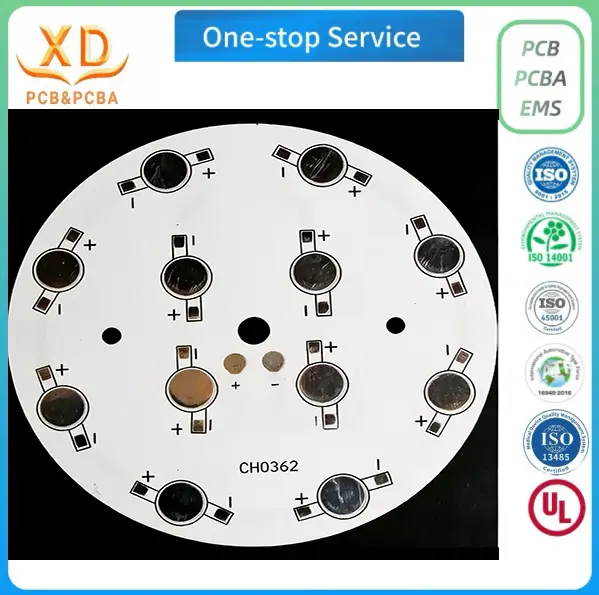
Start by identifying the intended application. A standard household bulb may have a compact circular board, while a spotlight, downlight or industrial lighting product may use a different shape or layout.
Next, confirm which dimensions are fixed. These may include the outer diameter, mounting-hole positions, cutouts, maximum board thickness and clearance around components. If the PCB must sit against a particular surface or align with a heat-transfer component, show that interface in a mechanical drawing. A photograph can help explain the assembly, but it should not replace dimensions and tolerances.
Build a Quotation Package That Can Be Priced Accurately
A short, complete inquiry usually saves more time than a long email that leaves key specifications unanswered. The aim is to give the manufacturer enough information to quote the intended construction rather than make assumptions that later need to be revised.
| Information | What to include | Why it matters |
|---|---|---|
| Board type | Aluminum PCB and any required construction details | Defines the type of product being quoted |
| Material | Required alloy or approved material specification | Prevents ambiguity about the substrate |
| Finished thickness | Nominal thickness and critical tolerance | Helps confirm mechanical fit |
| Copper specification | Required copper weight or finished copper requirements | Supports review of the circuit construction |
| Dimensions | Outline, diameter, holes, slots and cutouts | Defines the board's physical shape |
| Circuit files | Gerber package or another agreed manufacturing format | Provides the pattern used for fabrication |
| Surface finish | Required finish based on the design and assembly process | Helps align the board with downstream use |
| Quantity | Sample quantity and planned order volume | Allows realistic pricing and planning |
| Supply scope | Bare board or assembled PCB | Clarifies the expected deliverable |
| Quality requirements | Inspection items and agreed acceptance criteria | Defines how the order will be evaluated |
| Delivery and packaging | Target schedule and any handling requirements | Avoids late commercial clarifications |
When comparing offers, compare like with like. One supplier may quote bare-board fabrication only, while another includes component procurement or assembly. Prices can also differ because of board thickness, copper requirements, surface finish, inspection scope or packaging. Ask suppliers to list assumptions and exclusions so that the comparison reflects the same order.
Make the Supply Scope Explicit: Bare Board or Assembly
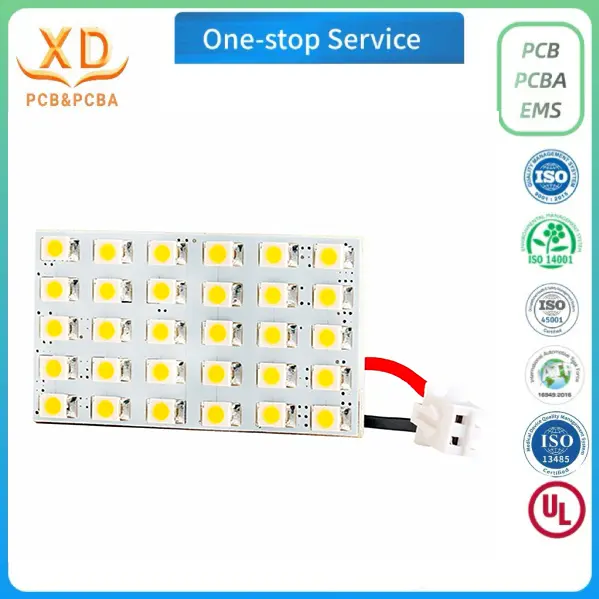
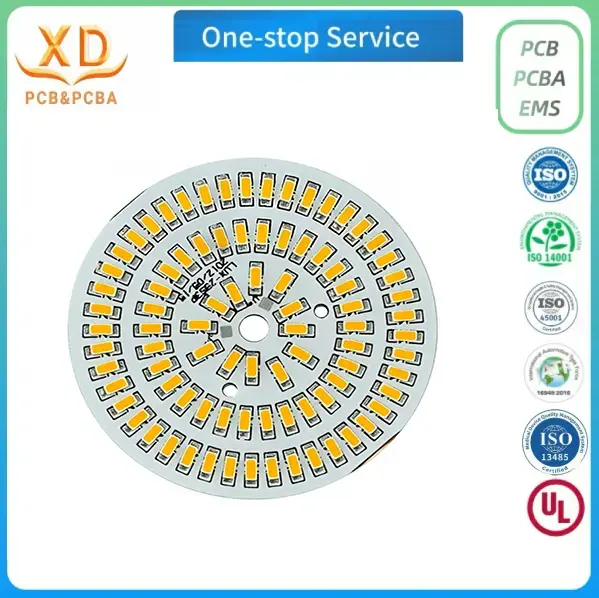
The phrase “LED bulb PCB” does not always describe the same deliverable. Some buyers want a fabricated board without components. Others need an SMD-assembled circuit board ready for the next stage of product assembly. This distinction should appear in the inquiry and the purchase order.
A bare aluminum PCB is supplied without electronic components mounted. The manufacturing package mainly defines the board construction, copper pattern, dimensions and finish. An assembled PCB adds component-related requirements, including part identity, placement, orientation and soldering acceptance.
For assembly, prepare a bill of materials (BOM) with clear manufacturer part numbers or other unambiguous identifiers. Provide placement data and an assembly drawing where applicable. If substitutions are allowed, list the approved alternatives and any conditions that apply. Do not assume that a component with a similar package size is electrically interchangeable with the specified part.
It is also important to establish who supplies the components. The customer may provide them, the manufacturer may source them, or the order may use a combination of both arrangements. Each option affects planning and responsibility. Confirm how shortages, discontinued parts or proposed substitutions will be handled before production begins.
The quotation should state whether it includes bare-board fabrication, component sourcing, assembly, inspection and any agreed testing. This prevents the common situation in which both sides believe they have agreed to a complete product but have priced different scopes of work.
Review the Board Construction Against the Design
Material and construction choices should follow the product's requirements rather than a generic preference. Xinda PCB's featured custom LED bulb aluminum PCB uses 5052 aluminum alloy. The stated finished board thickness for this featured product is 1.0–2.0 mm, with copper thickness of 1–2 oz.
Those figures apply to the featured product. The broader aluminum PCB process specification covers finished board thicknesses of 0.4–3.0 mm and copper thicknesses of 1–6 oz, depending on the construction and design. Keeping the two ranges distinct helps avoid treating general process capability as a promise that every combination is available for every board.
The drawing should identify the required thickness and the tolerance where it affects fit or assembly. If a proposed change is acceptable, define who can approve it. A supplier should not substitute a different material or thickness simply because it appears similar or is easier to source.
Copper requirements also need to match the circuit. Copper weight, trace width, spacing and current requirements are related design considerations, but one parameter cannot compensate automatically for problems in another. The manufacturing files should represent the approved layout, and any proposed changes should be reviewed before the supplier proceeds.
Xinda PCB's general aluminum PCB process information lists a minimum trace width and spacing of 0.15 mm and a maximum processing size of 120 cm × 60 cm. These are general process figures, not a guarantee that every board shape or construction can be made at those limits. Feasibility should be confirmed against the actual files.
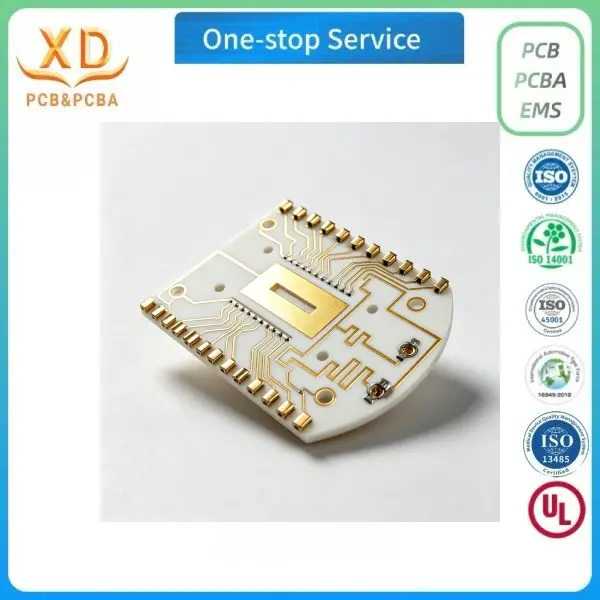
Surface finish is another item to specify clearly. The stated general process options include OSP, HASL, immersion gold, lead-free immersion tin and immersion silver. The suitable choice depends on the design and assembly requirements, so the purchase specification should identify the agreed finish rather than leave the decision open.
Give the Manufacturer a Consistent File Set
Manufacturing problems can start when documents contradict one another. A drawing may show a revised outline while the Gerber files still represent the previous version. A BOM may list a component that is missing from the placement data. These inconsistencies create questions that should be resolved before production.
For bare-board fabrication, provide the Gerber files or another format agreed with the manufacturer, plus a mechanical drawing for the outline and critical features. Include the material, thickness, copper and surface-finish requirements in a written specification. If drill files are needed for the design, include those as part of the manufacturing package.
For an assembled board, add the BOM, placement data and assembly drawing. Check that reference designators match across the files and that polarity or orientation information is clear. If the design has special assembly restrictions, put them in the notes rather than relying on a conversation that may not reach the production team.
Revision control is simple but important. Give the approved files a clear revision identifier and state which package is released for manufacturing. If a change is made after a quotation or sample has been prepared, identify what changed and ask the supplier to confirm whether the change affects cost, lead time or feasibility.
What to Expect From Fabrication and Inspection
The manufacturing stages depend on the board design and order requirements. For aluminum PCBs, the process can include incoming material inspection, cutting, imaging, etching and solder mask printing where specified. The circuit pattern is formed during fabrication, after which inspection checks whether the board matches the manufacturing requirements.
Automated optical inspection (AOI) can identify visible circuit-pattern defects. Electrical testing checks the circuit characteristics covered by the selected method. Final quality assurance then checks the finished boards against the agreed specifications before packaging. These stages serve different purposes; a visual inspection alone does not confirm every electrical property, and an electrical test does not establish that every mechanical dimension is correct.
Buyers should ask what the inspection plan actually covers. For example, the order may require dimensional checks, verification of board thickness, review of visible circuit features and electrical continuity or isolation testing. The method and acceptance limits should be defined where they are important to the product.
If assembly is included, the quality requirements should cover the assembled product as well as the bare board. Depending on the agreed scope, this may include component identity, placement, orientation and solder-joint inspection. Functional testing should be discussed separately: it requires a defined method and suitable test conditions, and it should not be assumed to be included simply because the quotation says “assembly.”
Treat Sample Approval as a Manufacturing Decision
A prototype is useful when it answers specific questions. Does the PCB fit the housing? Are the mounting holes in the right positions? Does the selected thickness suit the available space? If components are mounted, are their identities, positions and orientations correct? These checks are more useful than a general visual judgment that the sample appears acceptable.
Before approving a sample, compare it with the latest design revision and record any changes needed. If the board outline must be adjusted, update the mechanical drawing and manufacturing data. If a component needs to move, update the placement information and assembly drawing. The supplier should receive the revised package before making another sample or starting production.
Agree on the acceptance criteria in advance. If the project requires electrical testing, specify what is to be checked and how results will be assessed. If the sample is only a bare board, do not treat its approval as confirmation that the complete lamp will meet every functional requirement.
Once the sample is accepted, retain the approved files and specifications as the reference for production. A physical sample can be useful for comparison, but it should not be the only record of the approved design. Written specifications make it easier to manage repeat orders and investigate differences between batches.
Plan the Move From Prototype to Volume Orders
The move from samples to production is not just a question of increasing quantity. The manufacturer needs to reproduce the approved design, obtain the required materials and components, follow the agreed inspection plan and package the order as specified.
Ask for quotations at the quantities you realistically expect to buy. Prototype pricing and production pricing may differ because of setup, material purchasing and process planning. If future demand is uncertain, request prices for several quantities and compare the assumptions behind each offer rather than expecting a fixed percentage reduction.
Lead time should also be confirmed against the actual scope. Material availability, component sourcing, sample approval and order size can affect the schedule. If the customer must approve a sample or supply components, those dependencies should be included in the plan. A target delivery date is only useful when both sides understand what must happen before production can be completed.
For repeat orders, identify the approved revision and specifications on the purchase order. If a supplier proposes a material change or component substitution, require review and approval before it is implemented. This is particularly important when the product design has already been validated against a specific construction.
Packaging should be discussed as part of the order rather than left until the boards are ready to ship. Confirm the required quantities per pack, labeling needs and any special protection required for transport. Where different PCB versions are ordered together, clear identification helps prevent confusion during receiving and assembly.
Common Problems That Are Easier to Prevent Early
A board that does not fit the housing often points to incomplete mechanical information. The solution is to provide a dimensioned drawing and identify critical tolerances before the quotation is finalized.
A quotation that excludes assembly usually reflects an unclear supply scope. State whether the order is for bare PCBs or assembled boards, and ask the supplier to list what is included.
A mismatch between the sample and production order may result from uncontrolled file revisions. Use one clearly identified approved package and make sure both sides refer to the same revision.
Disagreement about quality often arises because acceptance criteria were never specified. Define the required inspections and agree on the applicable limits before placing the order.
Delays may occur when component sourcing or customer approvals are not included in the schedule. Confirm responsibilities, availability and approval points at the beginning rather than treating them as last-minute details.
Choosing a Supplier for Custom LED Bulb PCBs
Price matters, but it should be considered alongside the supplier's ability to meet the specified construction and communicate clearly during the project. A useful supplier review starts with practical questions: Can the manufacturer support the required material and dimensions? Can it review the manufacturing package? Does the quotation identify the exact deliverable? What inspection records can be provided for the order?
For assembled products, confirm the assembly scope and component-sourcing arrangements separately from the bare-board capabilities. Ask how proposed substitutions will be approved and what testing is included. For a new design, it is also useful to understand how the supplier will handle sample revisions and carry the approved design into production.
Custom LED Bulb PCB Manufacturing at Xinda PCB
Xinda PCB offers custom aluminum PCB manufacturing for LED lighting applications. The featured custom LED bulb aluminum PCB uses 5052 aluminum alloy, with a stated finished board thickness of 1.0–2.0 mm and copper thickness of 1–2 oz. The broader aluminum PCB process specification includes finished board thicknesses of 0.4–3.0 mm and copper thickness of 1–6 oz, depending on the design and construction.
The stated process includes incoming material inspection, cutting, imaging, etching, solder mask printing, AOI inspection, electrical testing, final quality assurance and packaging. Custom samples and volume orders are accepted.
For a quotation, prepare the board outline and manufacturing files, material and copper requirements, surface finish, required quantity and inspection expectations. If the order includes SMD assembly, provide the BOM and placement information as well. This allows the supply scope to be confirmed before pricing and production planning.
Product information is available at www.xdpcba.com. For project inquiries, contact bluesky@xdpcba.com or Sales10@xdpcba.com.
Before Releasing the Purchase Order
A custom LED bulb PCB order is ready to move forward when the supplier and customer agree on what will be delivered, which files define the design and how the finished product will be checked. The material, thickness, copper requirements and surface finish should match the approved specification. Assembly and component sourcing should be included explicitly where required.
The approved sample and manufacturing revision should become the reference for production. Any later change should be reviewed before it is applied to an order. For purchasing teams, that clarity is the practical value of a well-prepared PCB order: fewer assumptions at quotation, a more useful sample review and a more consistent basis for repeat manufacturing.
Label: