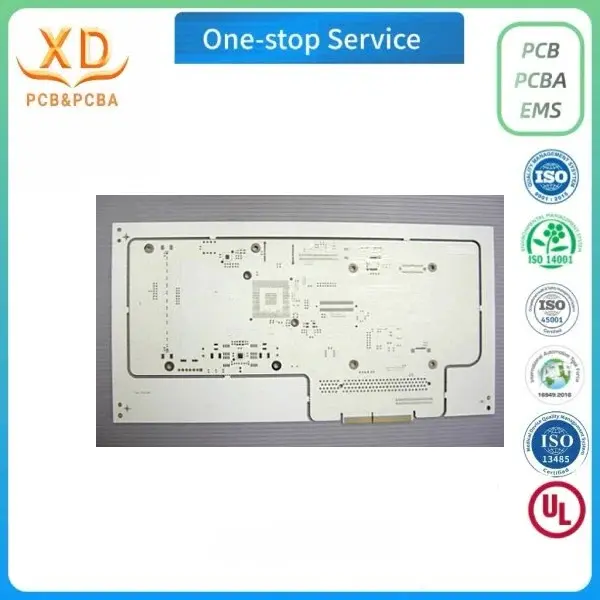
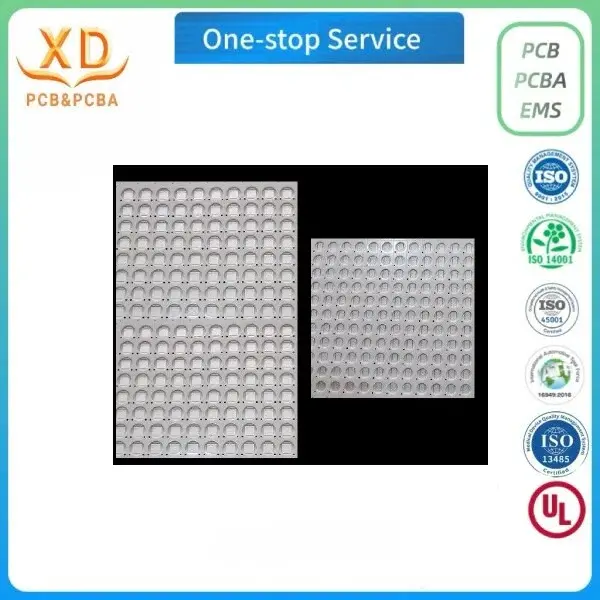
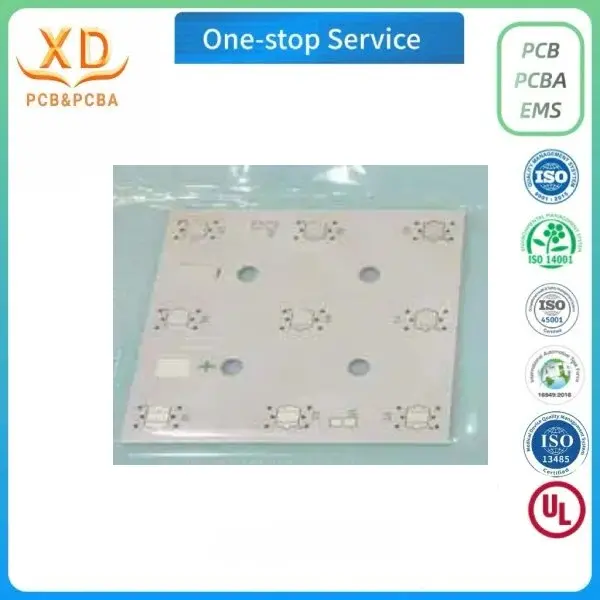
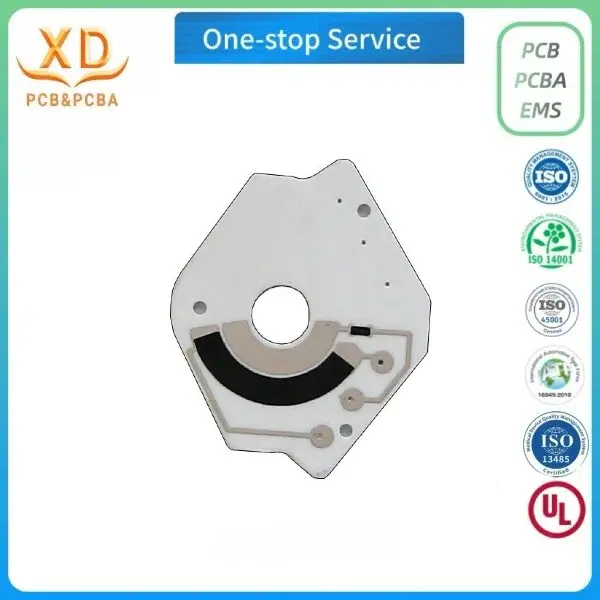
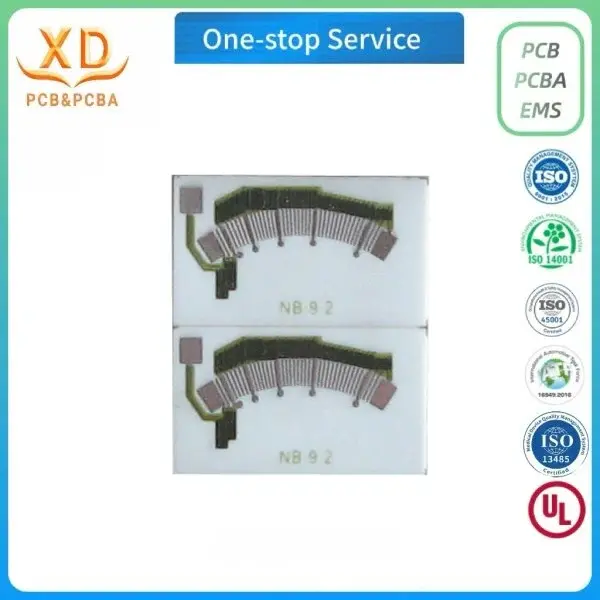
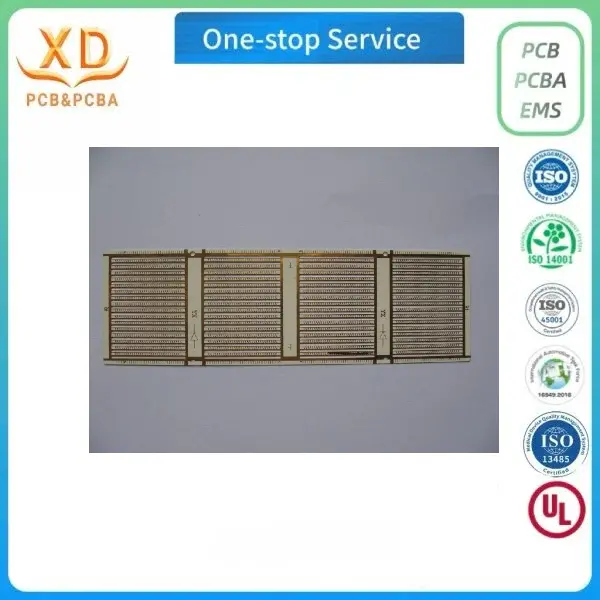
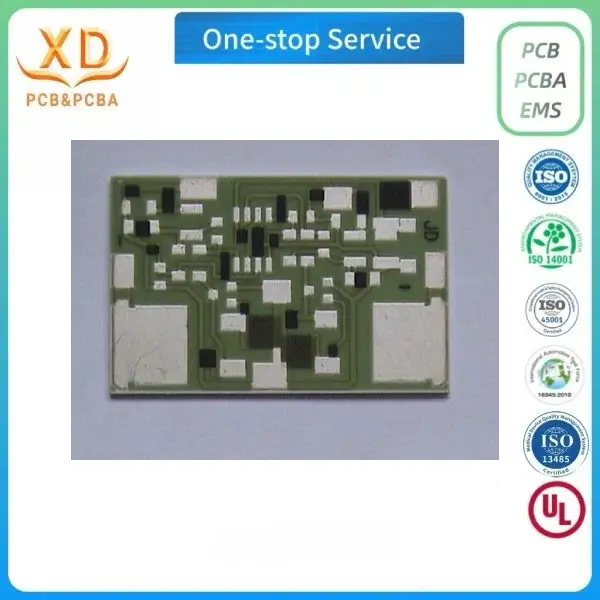
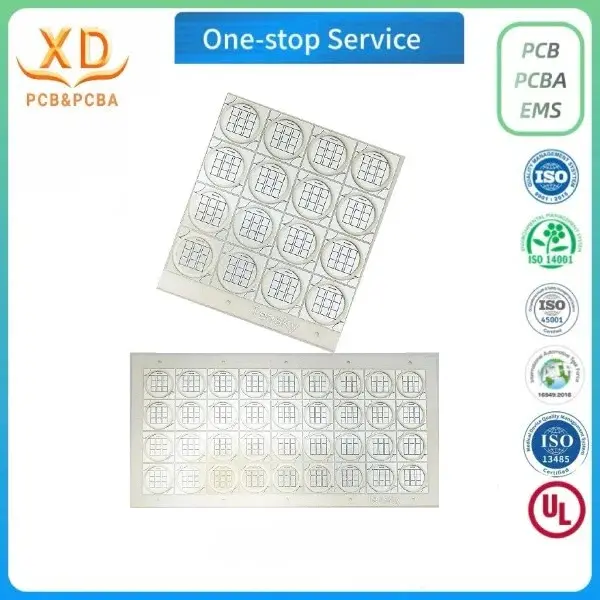
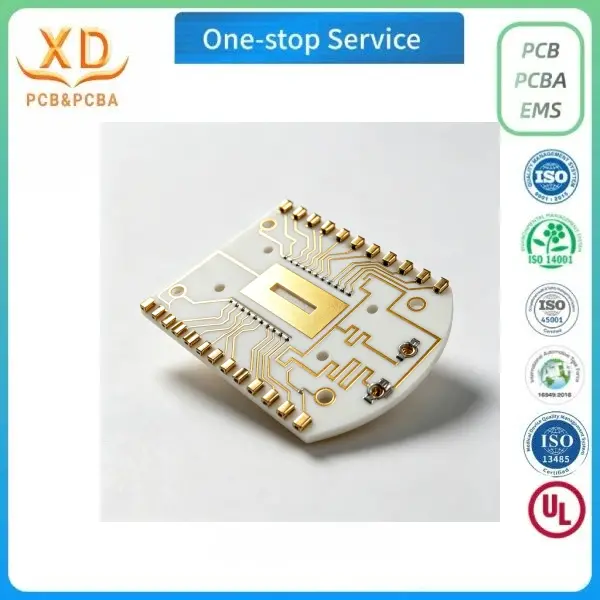
Ceramic PCB Process
l Substrate Material: Alumina (Al₂O₃ ≥ 96%), Aluminum Nitride (AlN ≥ 96%), Silicon Carbide (SiC), Zirconia (ZrO₂)
l Thermal Conductivity: ≥ 20 W/mK (Al₂O₃) / ≥ 170 W/mK (AlN)
l Dielectric Constant: 9.0-10.0 @ 1MHz
l Dielectric Loss: ≤ 3×10⁻⁴ @ 1MHz
l Volume Resistivity: ≥ 10¹⁴ Ω·cm
l Flexural Strength: ≥ 350 MPa
l Density: ≥ 3.7 g/cm³
l Water Absorption: 0%
l Substrate Thickness: 0.25mm – 2.0mm
l Board Dimensions: 100×100mm – 140×190mm
l Copper Thickness: 70UM
l Minimum Line Width/Spacing: 0.04mm / 0.04mm
l Surface Finish: ENIG (Electroless Nickel Immersion Gold), Flash Gold, Soft Gold, Hard Gold, HASL, Immersion Tin, OSP
l Circuit Technology: Double-sided conductive metallization
l Impedance Control: Supported
l Blind/Buried Vias: Supported
l Outline Fabrication: Die cut, laser cut, CNC routing, V-scoring
l Available Colors: White, Black, Yellow, Gray, Gold, Blue, Green, Silver, Pink, Red, Transparent
l Inspection & Testing: IPC-TM-650 standard compliance
Application Scenarios
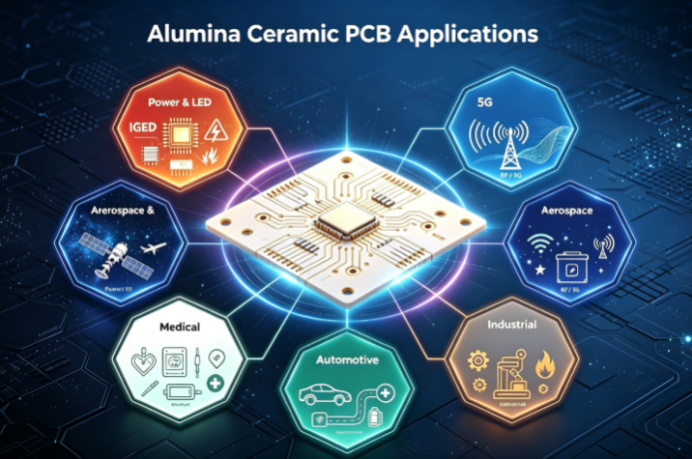
Alumina ceramic PCBs are widely used across multiple high-reliability industries:
1. Medical Electronics – Medical device control cards, diagnostic equipment, CT scanners, and surgical instruments leverage
alumina's biocompatibility, chemical inertness, and high reliability.
2. Industrial Control – Industrial automation, control systems, power modules, and high-temperature sensors benefit from
alumina PCB's excellent thermal dissipation and mechanical strength.
3. Power Electronics & LED Lighting – High-power LED modules, IGBT power modules, and automotive electronics require
superior thermal management provided by ceramic substrates.
4. RF/Microwave & 5G Communications – Alumina substrates with stable dielectric properties are ideal for RF amplifiers,
microwave filters, and 5G communication modules.
5. Aerospace & Defense – Ceramic PCBs are extensively used in avionics, satellite systems, and military electronics where
extreme temperature resistance and long-term reliability are critical.
6. New Energy Vehicles – Used in battery management systems (BMS), motor controllers, and DC-DC converters for electric vehicles.
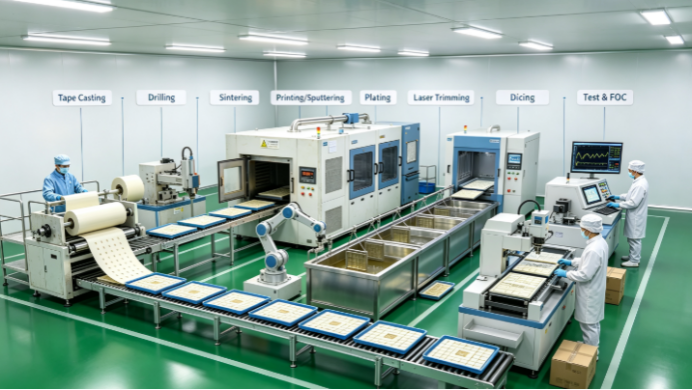
Ceramic PCB Production Line
Standard Alumina Ceramic PCB Production Flow:
Tape Casting → Drilling → Sintering → Screen Printing / Sputtering → Plating → Laser Trimming → Dicing → Electrical Test & FQC

 0755-27781532-8010; 02988446863