0755-27781532-8010; 02988446863














Sep 02, 2026
Circular Aluminum PCBs for LED Lighting: Downlights, Panel Lights and Other Applications
Oct 19
Intelligent Browse: 1
The circuit board inside an LED light is rarely the first thing a buyer considers when selecting a lighting product. The housing, brightness, appearance and installation method usually receive more attention. However, the PCB has to fit the fixture and support its electrical design before the finished light can be assembled.
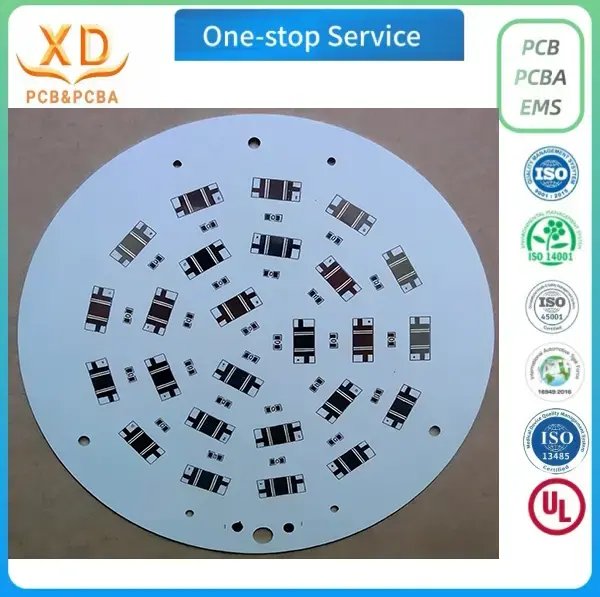
Circular aluminum PCBs are used in a range of LED lighting products, including downlights, spotlights and other compact fixtures. Their metal base provides a heat-transfer path, while the circular outline can suit lamp housings designed around a central light source. The requirements are not identical across these applications. A board for a recessed downlight may need to fit a reflector and mounting structure, while a board for a panel light may have to accommodate a different optical arrangement.
Choosing the right board therefore starts with the intended lighting application. The fixture structure, component layout, installation conditions and manufacturing requirements all need to be considered together. For lighting manufacturers, understanding these differences helps avoid choosing a PCB based on shape alone.
Circular Aluminum PCBs in Residential and Commercial Downlights
Downlights are common in homes, offices, hotels, retail spaces and other indoor environments. Many designs use a compact light source fitted into a recessed or surface-mounted housing. A circular PCB can follow the shape of the fixture and provide a suitable base for the LED circuit.
The available space inside a downlight is often limited. The board may sit close to a reflector, lens, driver or mounting bracket, leaving little room for changes once the mechanical design has been finalized. Its outside diameter is important, but the position of the mounting holes and the clearance around components can be equally significant.
The board layout should reflect the intended arrangement of the LEDs and the surrounding optical parts. If the fixture uses a reflector, the component positions need to be compatible with its shape and mounting position. Connectors, wires and fasteners also need sufficient clearance so that they do not interfere with assembly.
Downlights used in commercial buildings may operate for long periods each day. In these applications, the PCB construction should be considered alongside the housing and the intended operating conditions. An aluminum base can help transfer heat away from the circuit area, but the complete fixture design determines how effectively that heat moves away from the LEDs.
For manufacturers developing a new downlight, reviewing the PCB and housing drawings together is more useful than approving the board outline separately. This makes it easier to identify mechanical conflicts before samples are produced.
Panel Lights Have Different Layout Requirements
Panel lights are widely used in offices, schools, commercial buildings and other indoor spaces where broad, even illumination is required. Their internal construction varies by product. Some designs use LED boards arranged around an optical guide, while others use different layouts according to the light source and housing.
This means a circular PCB should not automatically be selected for every panel light. The board shape must suit the actual lighting architecture. Where a circular board is used, its position relative to the optical components needs to be established during design.
Component placement can affect how the light source aligns with the optical system. The mechanical design should account for the board outline, mounting features, wiring routes and the space needed for other internal parts. A PCB that fits the enclosure may still require revision if its mounting points or component locations conflict with the intended assembly.
Panel light manufacturers should also confirm whether the board is supplied as a bare PCB or as an assembled circuit board. If components are to be installed before delivery, the assembly data and component requirements need to be included in the order. This distinction can affect both the quotation and the production arrangement.
For custom projects, the most useful starting point is the actual fixture drawing and the approved circuit design. The PCB can then be reviewed against the available space and the intended optical arrangement instead of relying on assumptions based on the product category.
Spotlights and PAR Lamps Require Careful Component Placement
Spotlights and PAR lamps direct light toward a particular area or object. Their optical arrangements can differ from those of broad-coverage panel lights, and the position of the LED source may be closely tied to the reflector or lens.
A circular aluminum PCB can provide a practical base for a compact LED arrangement, but the board must fit the fixture without obstructing nearby components. The available diameter, mounting positions and component clearances should be confirmed against the mechanical design.
The electrical layout also needs to suit the intended LED configuration. Trace routing, copper thickness and component placement should follow the circuit requirements rather than being chosen solely because the board is circular. If the design includes closely spaced features or limited routing space, the manufacturing files should be reviewed before the board is released for production.
Spotlights and PAR lamps may be used in retail displays, hospitality settings, homes and commercial interiors. The final product requirements can vary considerably between applications, so there is no single PCB construction that suits every lamp.
For a custom design, the PCB manufacturer needs clear fabrication data and the relevant mechanical information. These details help establish whether the requested board can be produced as specified and whether any dimensions or construction requirements need further confirmation.
Outdoor and Industrial Lighting Bring Different Operating Conditions
LED floodlights, wall washers and industrial lighting products may operate in environments that differ substantially from those of indoor downlights. Depending on the installation, they can be exposed to changing ambient temperatures, long operating periods, vibration or other environmental conditions.
An aluminum PCB may be suitable for these products, but the board should be evaluated as part of the complete luminaire. The enclosure, mounting arrangement and surrounding thermal path all affect the conditions experienced by the LED circuit. The PCB material alone does not establish whether the finished light is suitable for a particular outdoor or industrial environment.
Mechanical design also deserves attention. The board outline and mounting features need to match the fixture, while the material and thickness should follow the product specification. Where a lighting product has specific environmental or reliability requirements, the manufacturer should define the necessary checks at the product level.
The same principle applies to wall washers and other fixtures with unusual shapes. A circular PCB may be appropriate for a particular light source or module, but it should not be assumed to suit every long or linear lighting arrangement. The required outline should come from the actual design.
For industrial lighting projects, buyers should discuss the application conditions with the product engineering team before finalizing the PCB specification. This helps ensure that the selected board is consistent with the intended use rather than relying on a general claim about aluminum substrates.
Automotive Lighting Uses Require Application-Specific Review
Aluminum PCBs can also be used in certain automotive lighting products, including fog lamps, ambient lighting modules and auxiliary signal lamps. These applications may have limited installation space and specific requirements for the shape and placement of the circuit board.
The mechanical arrangement can be particularly important when the PCB must fit within an existing lamp assembly. Mounting points, connector positions and component clearances should be confirmed against the relevant design drawings. Any changes to the board outline need to be checked against the rest of the assembly before production.
Automotive applications may also involve operating conditions and qualification requirements that differ from those of ordinary indoor lighting. Buyers should confirm the applicable specifications, tests and supplier requirements for the particular project. The fact that a PCB is made from aluminum does not, by itself, establish suitability for an automotive application.
Where a circular board is being developed for a vehicle lighting module, the supplier should receive the correct manufacturing files and clearly defined material requirements. The customer should also establish which inspection records or qualification documents are needed before the order is placed.
What the Different Applications Have in Common
Although downlights, panel lights, spotlights and other LED products have different structures, their PCB requirements share several basic considerations.
Mechanical fit comes first. The board needs to match the housing, mounting points and available space. A correct outside diameter does not guarantee that the complete board will fit if holes, cutouts or components are misplaced.
Circuit design must match the intended product. Copper thickness, trace width and component layout need to reflect the electrical design. These details should be defined in the fabrication data rather than left to assumptions during manufacturing.
Thermal conditions need to be considered at fixture level. An aluminum base provides a route for heat transfer, but the result also depends on the board construction, contact with surrounding parts and the overall luminaire design.
Manufacturing files should reflect the approved design. Mechanical drawings, fabrication files and assembly information need to agree. Any changes made during development should be recorded in the current revision before production begins.
Inspection requirements should be agreed in advance. Dimensional checks, circuit inspection and electrical testing cover different characteristics. The buyer and supplier should establish which checks are required and how the finished boards will be accepted.
These points provide a useful basis for comparing PCB options across different lighting products. They also help prevent the common mistake of treating a PCB as a standard component when its dimensions and construction are tied to a particular fixture.
Selecting a Circular Aluminum PCB for a Custom Lighting Project
For custom LED lighting, the board should be selected against the requirements of the actual product. Start with the housing dimensions, mounting arrangement and circuit design. Then confirm the material, finished thickness, copper specification and surface finish with the PCB manufacturer.
Xinda PCB's featured custom circular LED aluminum PCB uses 5052 aluminum alloy, with a stated finished board thickness of 1.0–2.5 mm and copper thickness of 1–2 oz. These specifications apply to the featured product. The broader aluminum PCB process specification covers finished board thicknesses of 0.4–3.0 mm and copper thicknesses of 1–6 oz, depending on the construction and design.
Available surface finishes in the general process specification include OSP, HASL, immersion gold, lead-free immersion tin and immersion silver. The appropriate option should be confirmed according to the design and assembly requirements.
For a quotation, provide the board outline, fabrication files, required material and thickness, copper specification, surface finish and order quantity. If the board needs to be supplied with components installed, include the BOM and placement data so the supplier can confirm the required scope.
Xinda PCB accepts custom samples and volume orders for aluminum PCB projects. Further product information is available at Xing Da Electric Technology Co., Ltd. For project inquiries, contact bluesky@xdpcba.com or Sales10@xdpcba.com.
Choosing the Board Around the Finished Light
A circular aluminum PCB should be evaluated according to the lighting product it is intended to serve. Downlights need a board that fits the compact housing and optical arrangement. Panel lights require a layout suited to their particular internal structure, while spotlights and outdoor fixtures may have different mechanical and operating requirements.
The most reliable approach is to define the fixture requirements first and then confirm the PCB construction against the approved design. Clear drawings, consistent manufacturing files and agreed inspection criteria give the supplier a sound basis for production.
For lighting manufacturers, this process helps keep PCB selection connected to the finished product. It also makes it easier to discuss custom requirements with a supplier before sampling and production begin.
Label: