0755-27781532-8010; 02988446863













Sep 18, 2026
Custom Round LED Aluminum PCB Manufacturer in China for OEM Lighting Introduction
Oct 10
Intelligent Browse: 0
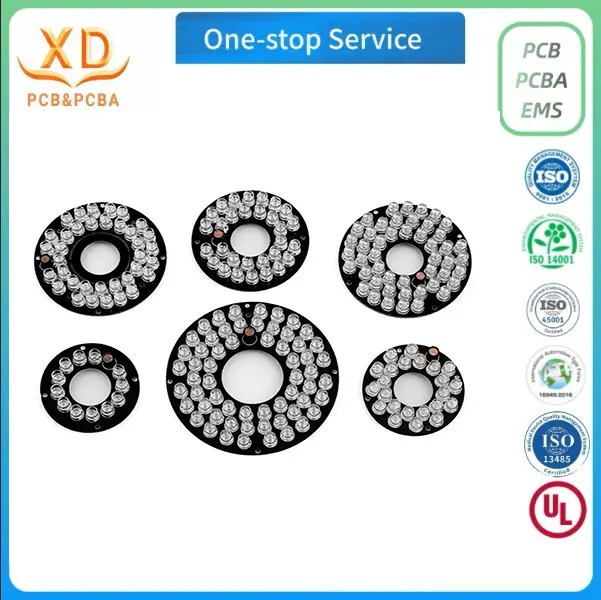
Round LED aluminum PCBs are commonly used in spotlights, downlights, PAR lamps, ceiling lights, and other lighting products where the circuit board needs to fit a circular housing. Unlike a standard rectangular PCB, a round board must match the lamp's internal dimensions, LED arrangement, mounting positions, and thermal design.
For lighting manufacturers, selecting a suitable aluminum PCB is not simply a matter of choosing a circular shape. The board must accommodate the electrical layout, provide a practical heat-transfer path, and remain consistent across production batches. These requirements become particularly important for OEM projects, where the PCB must fit an existing product design or meet a customer's specific technical drawings.
Founded in 2011, Xingda Group is a professional circuit board manufacturer based in China, specializing in PCB, FPC, rigid-flex PCB, PCBA, and related electronic manufacturing services. Its aluminum PCB product range includes custom circular boards for LED lighting applications. Buyers can learn more about the company's manufacturing capabilities on the Xingda Group official website.
This guide explores the main design considerations for round LED aluminum PCBs and explains what overseas lighting brands should evaluate when sourcing from a Chinese manufacturer.
1. Why Round Aluminum PCBs Are Used in LED Lighting
A circular PCB is often selected because it follows the shape of the lamp housing. This is common in recessed downlights, spotlights, PAR lamps, and compact lighting modules, where the available installation space may be limited.
An aluminum metal-core PCB, often called an MCPCB, typically consists of a copper circuit layer, an electrically insulating dielectric layer, and an aluminum base. The aluminum base helps transfer heat away from the LED mounting area toward the surrounding thermal structure.
For LED lighting manufacturers, this construction offers several practical advantages:
Shape compatibility: The board can be manufactured to fit a circular or ring-shaped lamp structure.
Thermal management: The aluminum base supports heat transfer from the LED circuit area.
Mechanical rigidity: The metal substrate provides a stable base for surface-mounted LED components.
Layout flexibility: LED positions, circuit patterns, mounting holes, and other features can be adapted to the product design.
The actual thermal performance depends on the complete assembly, including LED power, dielectric properties, the board's contact with the housing, and the lamp's heat-dissipation structure. A custom aluminum PCB should therefore be designed around the complete lighting module rather than selected by shape alone.
2. Matching the PCB to Spotlights, Downlights, and PAR Lamps
Although these lighting products may all use round aluminum PCBs, their design requirements can differ considerably.

Spotlights
Spotlights often use a compact circular LED board positioned inside a reflector or optical assembly. The PCB diameter, LED placement, center opening where required, and mounting points must match the housing. The component layout should also account for the optical design and available space.

Downlights
Downlight modules may use circular boards with multiple SMD LEDs distributed across the surface. The design needs to accommodate the required LED arrangement and the way heat moves from the board into the lamp body. Board thickness and mounting method are important when matching an existing fixture.

PAR lamps
PAR lamp designs vary in diameter, power requirements, and internal construction. A custom board may need a specific circular outline, component spacing, and electrical connection arrangement. The manufacturer should follow the approved mechanical drawing and circuit files rather than assume one board fits every PAR lamp.
For OEM production, it is useful to provide the manufacturer with the lamp housing dimensions and the relevant mechanical drawings at the beginning of the project. This makes it easier to identify potential conflicts between the PCB outline, mounting holes, LED placement, and other internal components before fabrication begins.
3. Customization Options for Round LED Aluminum PCBs
A custom PCB should be specified according to the lighting product's actual requirements. Xingda's custom aluminum PCB product range provides a starting point for discussing circular LED boards and other application-specific aluminum circuit boards.
The published aluminum PCB process specifications include the following options:
Specification | Listed capability |
|---|---|
Aluminum material | 5052-H32 or 6061-T6 aluminum alloy |
Finished board thickness | 0.4–3.0 mm |
Copper thickness | 1–6 oz |
Minimum trace width and spacing | 0.15 mm |
Maximum processing size | 1200 × 600 mm |
Board types | Single-sided, insulated, and double-sided |
Surface finishes | OSP, HASL, immersion gold, immersion tin, and immersion silver |
These are general process specifications listed for the product range. The exact dimensions and available options for a particular round PCB should be confirmed with the manufacturer.
For example, a lighting brand developing a small spotlight may need a specific board diameter and closely controlled LED spacing. A downlight manufacturer may have different requirements for board thickness, mounting holes, and thermal contact with the fixture. Both projects may use aluminum substrates, but their production files and acceptance criteria will not necessarily be interchangeable.
The copper thickness, trace geometry, dielectric layer, and surface finish should also be evaluated together. Choosing a thicker copper layer alone does not guarantee better thermal performance or electrical suitability; the complete design and intended operating conditions determine the appropriate configuration.
4. What Should OEM Buyers Prepare Before Requesting a Quote?
A clear technical package helps a Chinese PCB factory evaluate a project more accurately. It also reduces unnecessary back-and-forth during sample development.
For a custom round LED aluminum PCB, buyers should prepare the following information:
PCB design files: Gerber files and drill files, where applicable.
Mechanical drawing: Board diameter, thickness, outline tolerances, mounting holes, and any required cutouts.
Material requirements: Aluminum alloy, dielectric specifications, and copper thickness.
LED layout: Component footprints, pad dimensions, spacing, and polarity.
Surface finish: The required finish based on the assembly process and storage requirements.
Order requirements: Prototype quantity, expected repeat-production volume, and target delivery schedule.
Quality criteria: Electrical testing, visual inspection, dimensional checks, and any additional requirements.
If the project is still at the design stage, provide a preliminary drawing and explain the intended lighting application. The manufacturer can then review the available information and identify which details need to be finalized before production.
If the board will be assembled with LEDs and other electronic components, the inquiry should also include a bill of materials (BOM) and pick-and-place data. Buyers should clarify whether they need bare PCBs only or assembled PCBAs, since these involve different manufacturing and inspection steps.
5. From Prototype Approval to Repeat Production
For OEM lighting projects, the first production sample is an important checkpoint. A PCB may meet the drawing requirements but still need to be evaluated inside the actual lamp assembly.
A practical validation process can follow four stages:
Stage 1: Design review
Check the PCB outline, mounting features, LED positions, circuit layout, and material specifications against the customer's documents. Any questions about dimensions or manufacturing tolerances should be resolved before fabrication.
Stage 2: Sample fabrication
Produce a small batch for dimensional inspection and assembly evaluation. The buyer can verify whether the board fits the lamp housing, whether the mounting holes align, and whether the LED positions correspond to the intended optical structure.
Stage 3: Assembly and performance evaluation
Install the board in the intended lighting product and evaluate its operation under the specified conditions. Depending on the project, checks may include electrical performance, soldering quality, and thermal behavior after the lamp reaches operating temperature.
Stage 4: Production release
Once the sample is approved, record the final design revision, material specifications, inspection requirements, and any agreed process parameters. These records help the manufacturer maintain consistency when the product moves into repeat production.
This process is particularly useful for lighting brands that sell several lamp models with similar appearances but different PCB dimensions or electrical layouts. Keeping separate, approved manufacturing files for each model reduces the risk of mixing revisions or applying the wrong design to a production order.
6. How a Chinese PCB Manufacturer Supports OEM Lighting Projects
When comparing suppliers, buyers should look beyond whether a factory can produce a round board. The more useful questions concern manufacturing scope, process control, technical communication, and the ability to support repeat orders.
Founded in 2011, Xingda Group specializes in a range of circuit board products, including conventional PCBs, flexible PCBs, rigid-flex PCBs, and PCB assembly. Its product portfolio includes aluminum circuit boards for LED lighting, allowing customers to discuss different board requirements with a manufacturer experienced in multiple PCB categories.
For an OEM buyer, a supplier's practical value can be assessed through several factors:
Specification review: Can the manufacturer review the supplied drawings and identify unclear requirements before production?
Manufacturing options: Can the factory accommodate the required board material, thickness, copper weight, outline, and surface finish?
Inspection procedures: Are electrical tests, optical inspections, and final quality checks defined for the project?
Sample support: Can the buyer validate a prototype before approving repeat production?
Order communication: Can the supplier maintain consistent documentation and communicate design or production issues promptly?
Xingda's published aluminum PCB manufacturing process covers incoming material inspection, cutting, imaging, etching, solder mask printing, automated optical inspection (AOI), electrical testing, final quality checks, and packaging. Its product information also indicates support for custom samples and volume orders. These details give buyers concrete points to discuss when assessing whether the manufacturer fits their project requirements.
xdpcba.com
+1
For additional information about the company's broader manufacturing scope, visit the Xingda Group website.
7. Common Sourcing Mistakes to Avoid
Even a straightforward circular PCB project can experience delays if the technical requirements are incomplete. Several common issues are worth addressing before an order is placed.
Choosing the board by diameter alone. Two boards with the same outer diameter may have different mounting holes, LED layouts, thicknesses, and circuit patterns. Always verify the complete drawing.
Treating aluminum as a guarantee of thermal performance. The substrate helps transfer heat, but the dielectric layer and complete lamp structure also matter. Thermal performance should be evaluated in the intended assembly.
Leaving manufacturing tolerances undefined. If a board must fit a precision housing, outline and hole tolerances should be documented instead of relying on general expectations.
Changing files without controlling revisions. If the LED layout or circuit pattern changes after sample approval, the updated files should be identified clearly and approved before production.
Skipping sample validation. Where fit, assembly, or thermal performance is critical, approving samples before repeat production helps uncover problems while the design can still be adjusted.
Addressing these issues early makes communication between the lighting brand and the PCB manufacturer more efficient and gives both sides a clearer basis for evaluating the finished boards.
Conclusion
Custom round LED aluminum PCBs are an important component in many spotlight, downlight, PAR lamp, and other circular lighting designs. Successful sourcing depends on matching the board's dimensions, circuit layout, substrate, copper thickness, and surface finish to the requirements of the complete lighting product.
For overseas OEM buyers, working with a Chinese PCB manufacturer can provide access to flexible fabrication options and a production partner for both sample development and repeat orders. The key is to begin with clear technical documents, validate samples in the actual lamp assembly, and agree on inspection requirements before mass production.
Xingda Group has specialized in circuit board manufacturing since 2011 and offers aluminum PCB solutions for different lighting applications. Buyers developing a new circular lighting module can review the custom aluminum PCB product information and contact the company to discuss their specific board design and manufacturing requirements.
Label: